
Teaching Styles
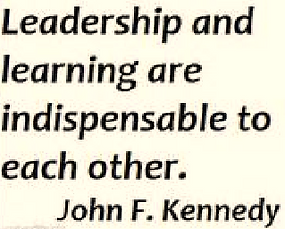
A quote that perfectly summarizes my point
TashaDavis
My interest in teaching philosophies and education styles has developed as I continue to learn about strengths and weaknesses of currently existing education systems, and my desire to try and create a new teaching philosophy and education style has increased drastically because of the issues I experience when trying to learn and the issues I have witnesses other students have learning.
During my experience at DRSS, one thing that I have noticed they do well here is project based learning. Project based learning is useful for STEM schools because of the specific subjects teachers are trying to impart on the students. Project based learning is good for teaching students how subject material can be used outside of the school and in the working world. Often during project based learning, group work, teamwork, and collaboration is a huge part of the assignments.
I have witnessed the two most commonly used forms of project based learning here at STEM. The first is where the students are given a project and must learn certain information to complete it. The second form is where the students are taught a certain set of information and at the end of that learning unit, they are given a project to complete using the information that they had just finished being taught. Typically the latter most form which is far more common, is created for the purpose of teaching and informing visitors of the school, usually during an Exhibition Night.
Geometry at my school is almost always taught in a project based style. Every time the teacher teaches something, the problem is presented to us as though it was a real world problem, even if it doesn’t lead to a tangible project in the end.
While this leads to new knowledge gained quite quickly, sometimes more emphasis is placed on giving students a tool to use and knowing when to use it, but not necessarily showing and explaining how and why it works. This is why we are placed in groups together to help each other complete the work. That strategy only ends up teaching the students when to use a specific tool and does not always help students to better understand why they are using a specific tool or even how to use it.
Once during a group quiz, I discovered that my two partners did not understand how to actually use the necessary tools on a thirty point quiz. Their regular work partners didn’t have the necessary skills required to help their classmates understand the content. I happened to be able to explain how this worked to them in ease, with words they could understand how the processes worked, and they were able to figure out how to solve the problem after that. Normally revisions have to be made on group quizzes, but we ended up getting a 30 out of 30 on that group quiz with the first go which is honestly quite hard to do.
I think that if we added the Montessori “students-help-students” style in addition to project based learning, it would solve the small gap in learning opportunity that using solely project and instruction based learning creates.
This is one of the examples that I will be adding to the first draft of my educational philosophy. I hope that during my time at DRSS I will be able to witness even more educational techniques that I will be able to observe and incorporate into my research.